Read about the direction of ERLA's projects, publications, events, and other initiatives. And do contribute!
ERLA TRAJECTORY
- making ERLA’s direction clear
- constantly open to new ideas and new members
- consistent across all the ERL components
- relating language to all dimensions of education
Our joint work is organised around 4-year cycles – as presented by the graphic:
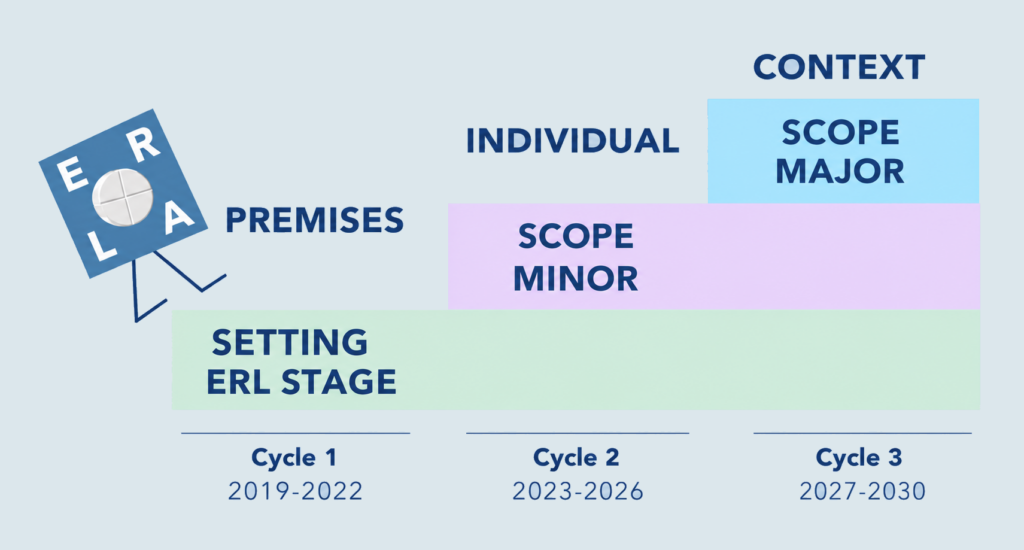
YOU ARE WELCOME TO JOIN ERLA’S “TOUR” AT ANY POINT OF ANY CYCLE.
The overall idea is to base our studies on four yearly foci of each cycle – that is we assign a topic to one particular year (e.g. language AFFECT in 2023) and after that we build upon the expertise obtained previously (e.g. focusing on language beliefs/activity/matrices over 2024-2026, we rest on our work from 2023 and that from the entire first cycle). We strive to do it a widely interdisciplinary and international circle (with members from within and outside the academic world). In this way we form a community of educational-cum-linguistic learning experience working towards fulfilment of ERLA’s two main goals. The yearly focus becomes the dominant theme of ERL Journal, Conference, Sessions, and the other ERL projects and initiatives.
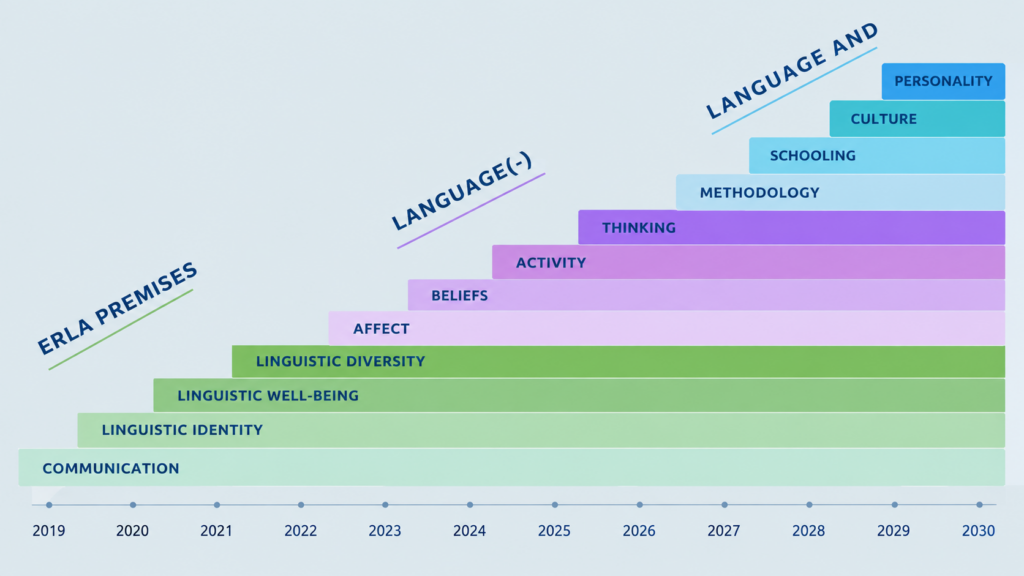
WE WELCOME EXPERTS, THEORETICIANS AND PRACTICIONERS, WHOSE INTERESTS COMBINE LANGUAGE AND ANY OF THE ITEMS NAMED HERE.
CYCLE 1: 2019-2022 – SETTING THE STAGE – ERL PREMISES
Over the first cycle we have established our 4 ERLA premises emphasising (a) the central position of language in education on the level of instruction, systems, culture, and society, and (b) the ensuing need of interdisciplinary studies to be undertaken worldwide. Most importantly, the premises in question apply to both learners as well as teachers, and to all educational systems.
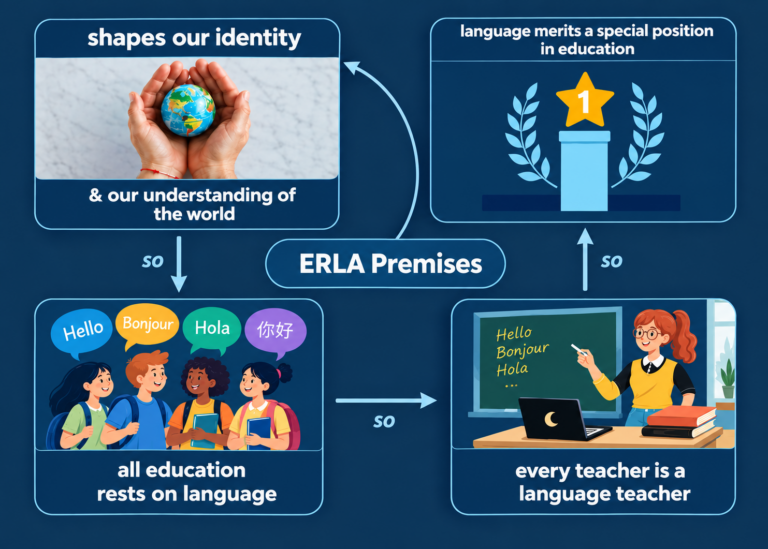
IF YOU SHARE THIS PERSPECTIVE, DO CONTACT US AND LET US KNOW HOW YOU HAVE ADDRESSED IT IN YOUR STUDIES AND/OR HOW IT WORKS IN YOUR EDUCATIONAL PRACTICE.
Our projects, events, and publications in ERL Journal have covered themes such as: multiculturalism, linguistic well-being, diversity, linguistic experience. During this defining stage of ERLA’s existence we have formed a small group of enthusiasts researching linguistic and pedagogical issues and sharing the plan to boost the position of language in education. Our team has been composed of experts in applied lingustics, language teaching methodology, theories of education, and a number of other related subdisciplines.
CYCLE 1 KEY ERL EVENTS
CYCLE 1 ERL JOURNAL ISSUES
OTHER SELECTED ITEMS OF CYCLE 1 JOINT WORK
EDUCATIONAL ROLE OF LANGUAGE SKILLS (Daszkiewicz M., Wenzel R., Kusiak-Pisowacka M.)
CYCLE 2: 2024-2026 – SCOPE MINOR – FOCUS ON THE INDIVIDUAL
The second cycle’s subsequent foci: four dimensions of learners’ and teachers’ linguistic experience, that is axiological, psychomotor, emotional, and cognitive domains
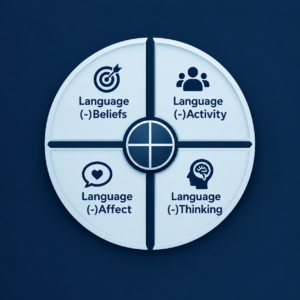
Two-directional interconnections/impact:
LANGUAGE AS THE “DOER”:
HOW LANGUAGE DETERMINES (AND RELATES TO) OUR VIEWS, ACTIONS, EMOTIONS/FEELINGS, and THOUGHTS
LANGUAGE AS THE “RECIPIENT”:
WHAT WE THINK OF LANGUAGE, WHAT WE DO WITH LANGUAGE, HOW WE FEEL ABOUT LANGUAGE, AND HOW WE UNDERSTAND (THROUGH) LANGUAGE
We studied – across disciplines and educational systems across the globe – themes cutting across the four domains – such as linguistic identity, bi- and multiligualism, learning difficulties, differentiated instruction, online education, narrative-, identity-, and drama-based instruction, equity and democracy in education etc. as well as those falling within the particular domains, including: motivation, willingness to communicate, language anxiety, personal constructs, learner and teacher beliefs, learrner autonomy, language attainment and evaluation, oracy, etc. The plan is ambitious and to achieve it properly, we hope to be supported by – inter alia – experts in psycholinguistics, neurolingustics, speech therapists, non-verbal communication, and linguistic anthropologists – all of whom we encourage to join ERLA so as to learn and do research together.
CYCLE 2 KEY ERL EVENTS
CYCLE 2 ERL JOURNAL ISSUES
ERL Journal Volume 15: ON LANGUAGE(S) SHAPING OUR WORLD(S)
ERL Journal Volume 16: THE COGNITIVE DIMENSION OF LANGUAGE AND OF LINGUISTIC EDUCATION
OTHER SELECTED ITEMS OF CYCLE 2 JOINT WORK
CYCLE 3: 2027-2030 – SCOPE MAJOR – FOCUS ON THE CONTEXT
The third cycle will have a much broader appeal and focus on the multiple settings of our linguistic experience, methods of examining it and its cultural determinants. In this period we aspire to bring about meaningful changes to educational systems across the globe and render language(s) fully-justified and highly-developmental foundations.
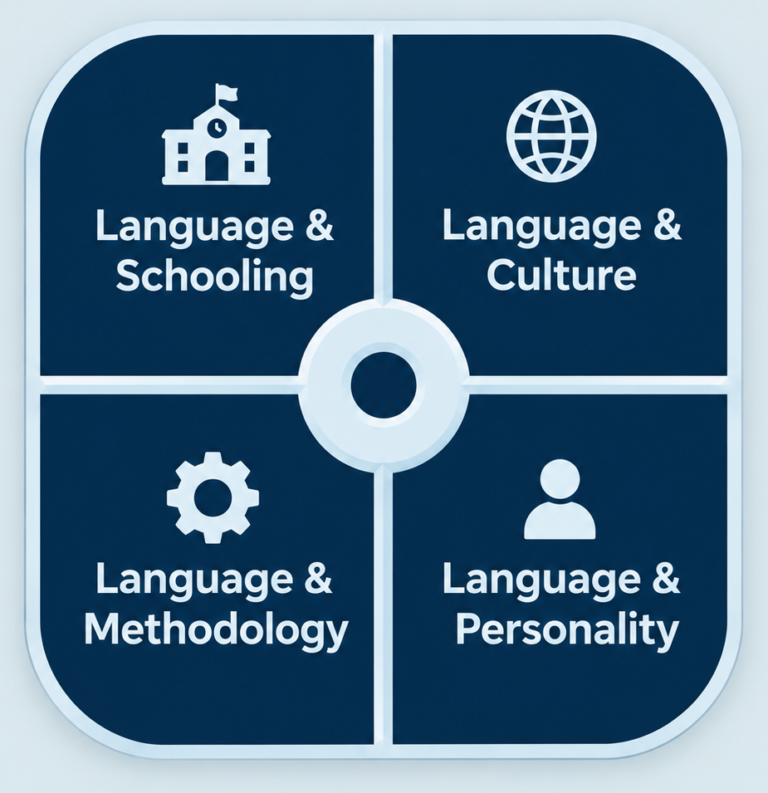
Two-directional interdependence:
LANGUAGE AS THE “DOER”:
HOW LANGUAGE DETERMINES (AND RELATES TO) EDUCATION, CULTURE, METHODS, and CHARACTERS (OURS & OTHERS’)
LANGUAGE AS THE “RECIPIENT”
HOW SCHOOLS, CULURES, METHODS, and PEOPLE TREAT AND POSITION LANGUAGE
ERLA’s dominant themes will focus on the macro-and micro- context of teaching and learning. The former includes the social, cultural and educational context, multicultural citizenship, linguistic equality and sustainability, language ecology, environmental linguistics, educational policies and practices, intercultural and cross-cross cultural practices and teacher education, whereas the micro-context comprises educational and institutional practices and curricula, teaching materials and learning environments. This cycle’s thematic expansion renders it necessary for ERLA to include in its team theoreticians and practitioners specialising in – inter alia – teaching methodology, intercultural communication, sociolinguistics, ethnolinguistics, ecolinguistics, linguaculturalism, cultural studies, curriculum design, transdiciplinary literacy, linguistic equality, translanguaging, and others, whose interests and studies fall within the cycle’s foci. Their role for this cycle is crucial and we invite them to join ERLA as early as they can.